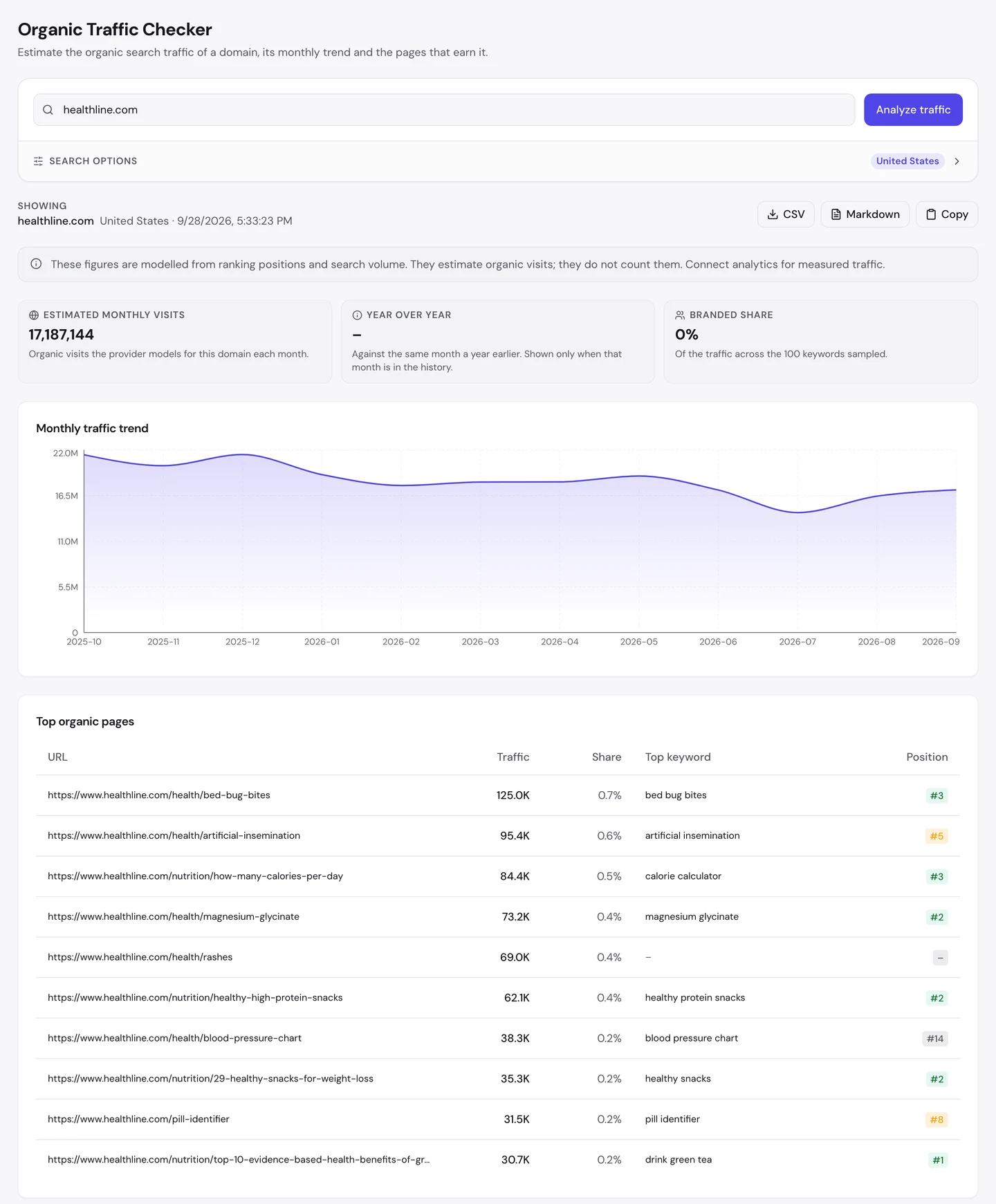
Healthline gets 17M visits a month from Google in the US, and no single page brings in more than 1% of them.
Its biggest page, about bed bug bites, is only 0.7% of the total. The rest is spread across millions of small health questions.
Most big sites we've studied work the other way. We ran it through our whole SEO toolkit to see how it works.
Here are 9 lessons you can copy, plus the one thing you can't.
Answer every small question
We started with our Organic Traffic Checker. It estimates a site's organic traffic, meaning the people who find it on Google without ads.
For Healthline, that's about 17M visits a month in the US. And 0% of it comes from people searching for the name "Healthline".
Almost everyone arrives with a question you might type yourself: "what do bed bug bites look like?" or "how many calories do I need?"
Compare that with Zapier, the automation app we studied on its own, where one blog post brings in 62% of the traffic. Healthline has no page like that.
So if one article drops in Google, Healthline barely notices. That's the safest kind of traffic a site can have.
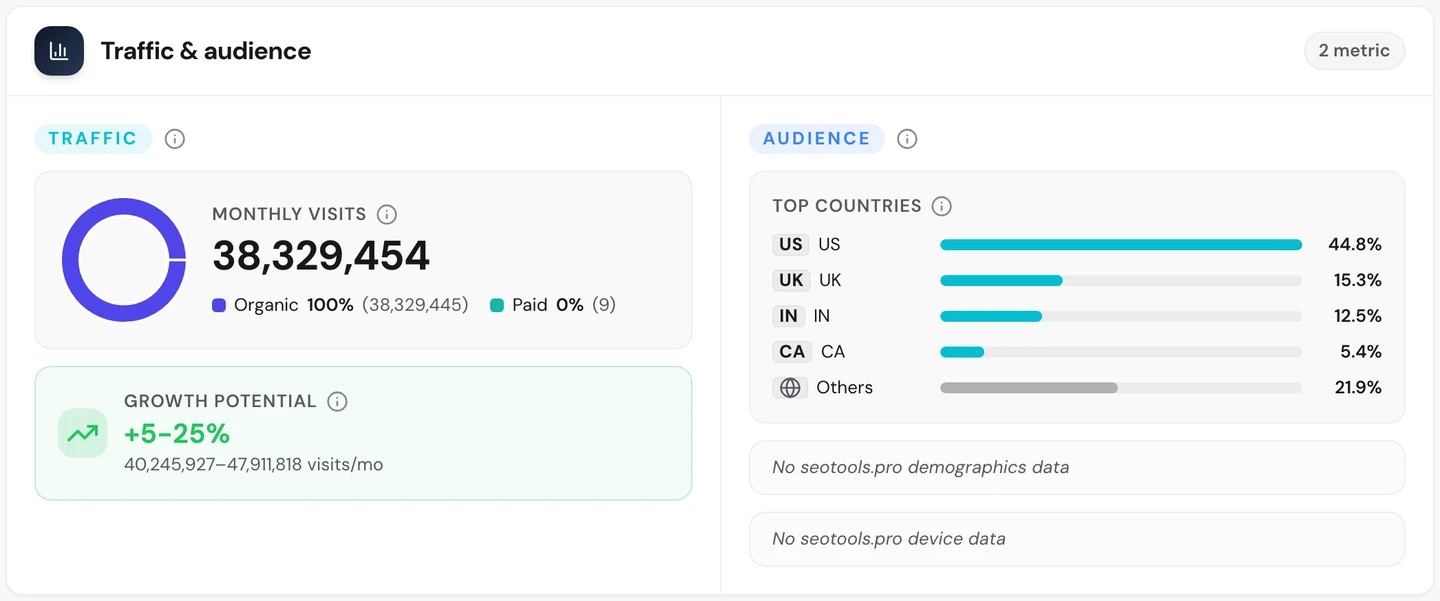
The Traffic tab of our Website Audit shows how far it reaches. Worldwide, Healthline gets about 38M search visits a month.
You can build the same safety net. List every question your customers ask, check which ones people search with our Keyword Research tool, and answer each one on its own page.
Healthline gets millions of visits by answering one small question per page, clearly and safely. We find the questions your buyers type and write the pages that answer them best.
- We map every question your buyers ask Google
- We write one clear page for each
- We add expert review so readers can trust it
- SEO and GEO, so AI answers quote you too
Show who checked the facts
Health advice can hurt people when it's wrong. So Google holds health pages to a higher bar, and it looks for signs that an expert checked them.
Healthline puts those signs right at the top of every article.
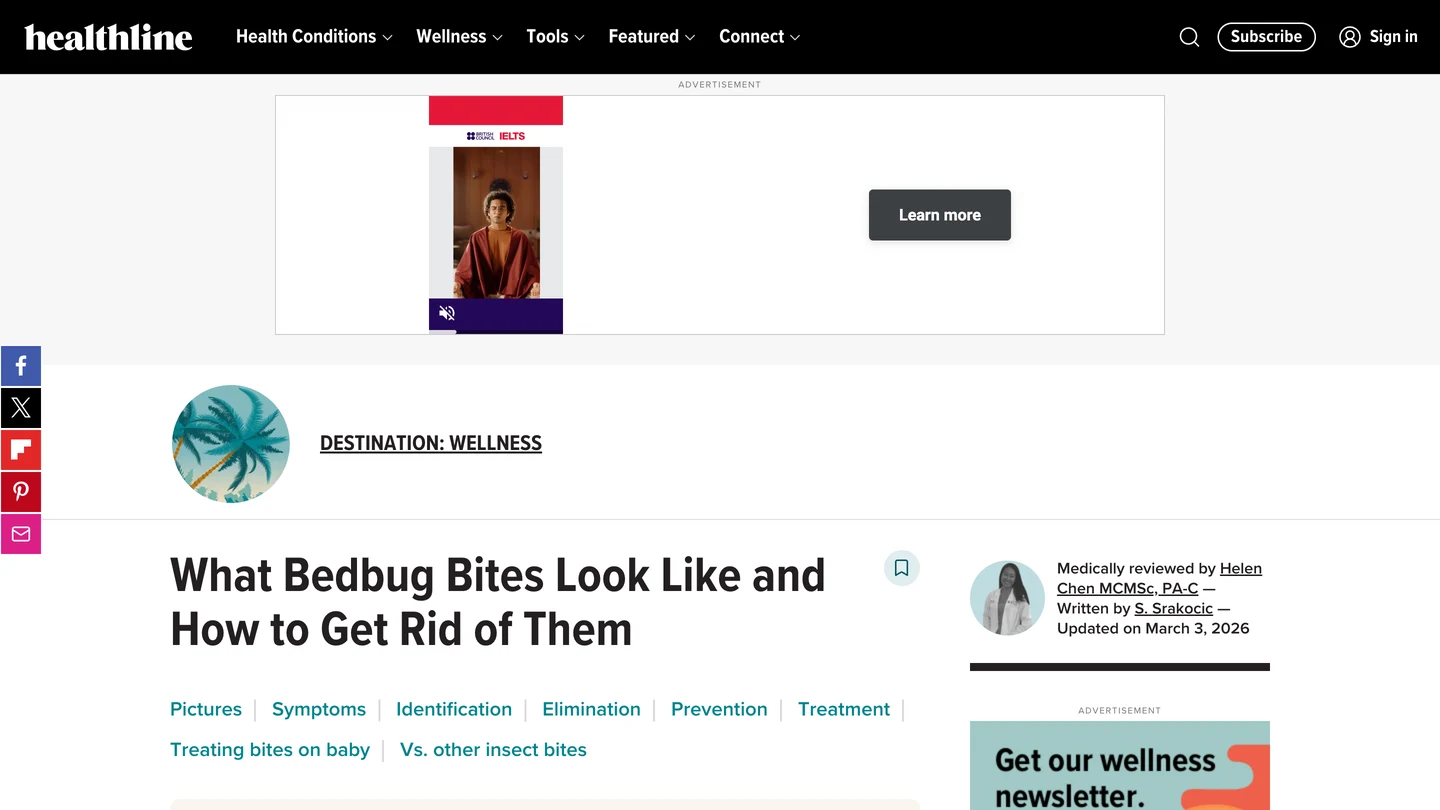
You can see who reviewed the page, who wrote it and when it was last updated. A reader can check them in one glance, and so can Google.
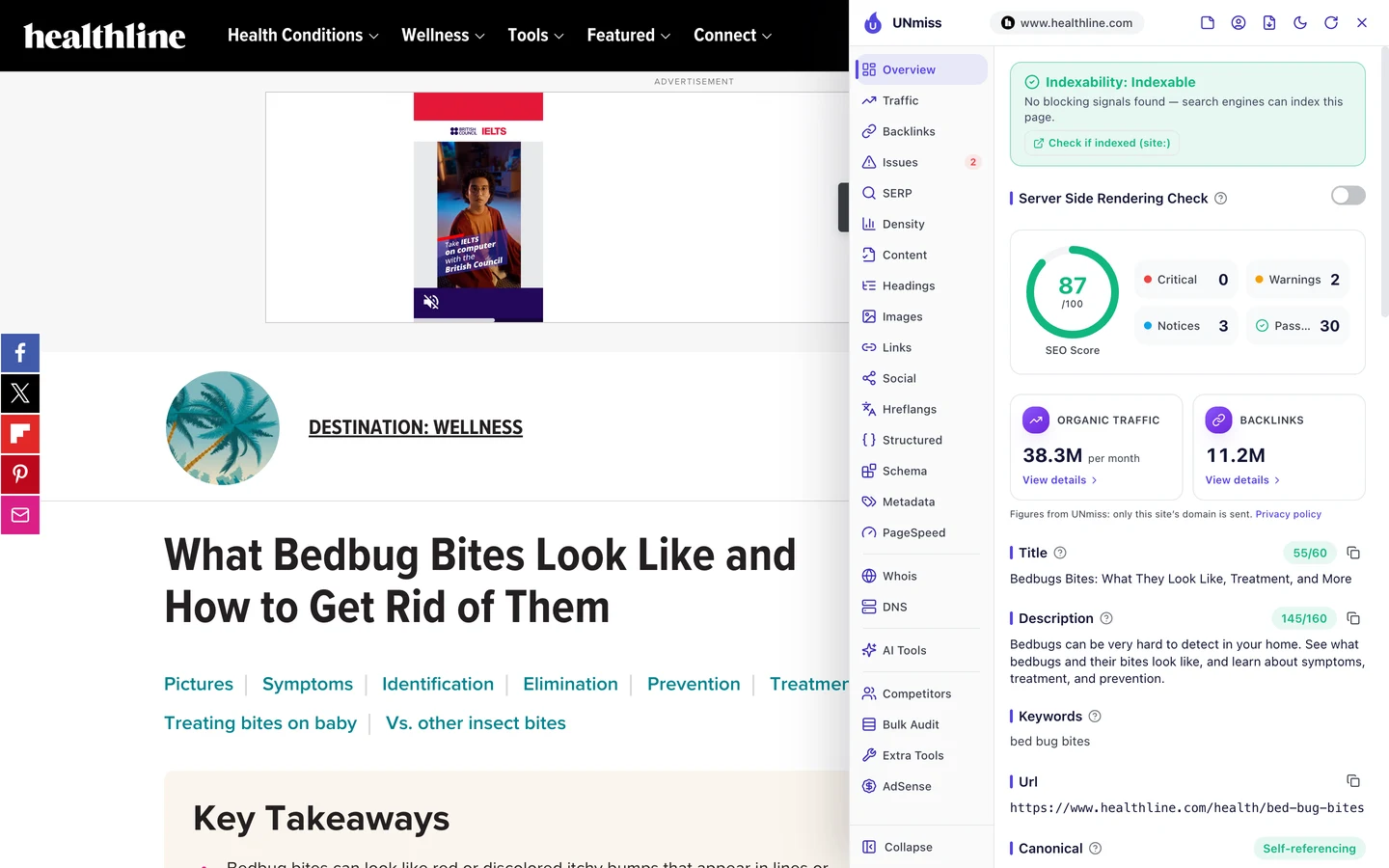
Our free browser extension shows the rest in one click. Open the page, click the UNmiss icon, and a panel opens beside it.
It runs 35 SEO checks and scores this article 87 out of 100.
The Structured tab shows the hidden part. The page carries structured data, code that tells Google what a page is, and here it says "medical page".
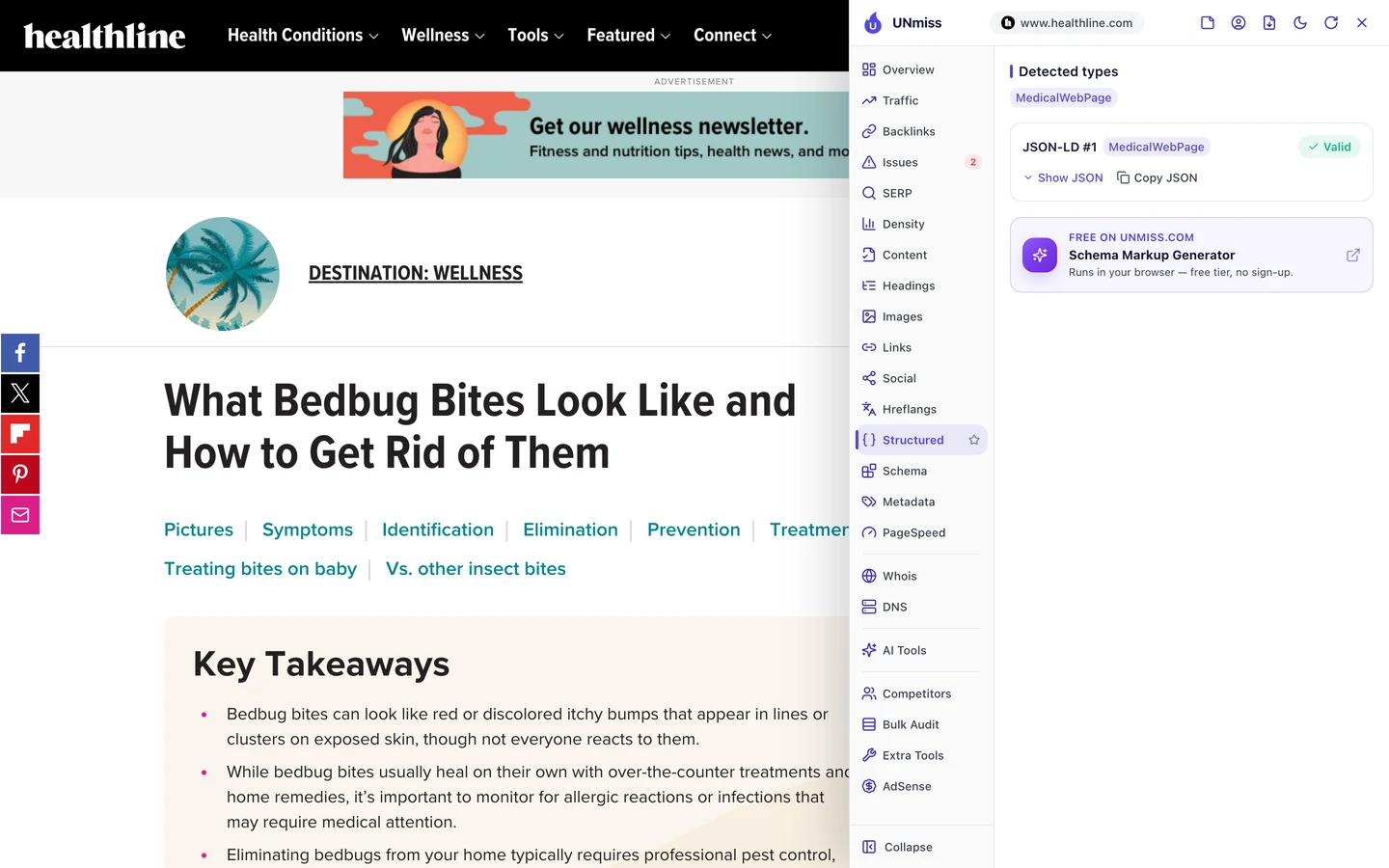
You can add the same code to your own pages with our Schema Markup Generator. Then name a real expert who checked each page, and show the date you last updated it.
Give people a tool to use
Look at the top pages again. 2 of them aren't articles at all.
One is a calorie guide that ranks near the top for "calorie calculator". The other is a pill identifier, where you type what a pill looks like and it tells you what it is.
Tools like these give you the answer faster than any article. And the pill identifier adds one more trick.
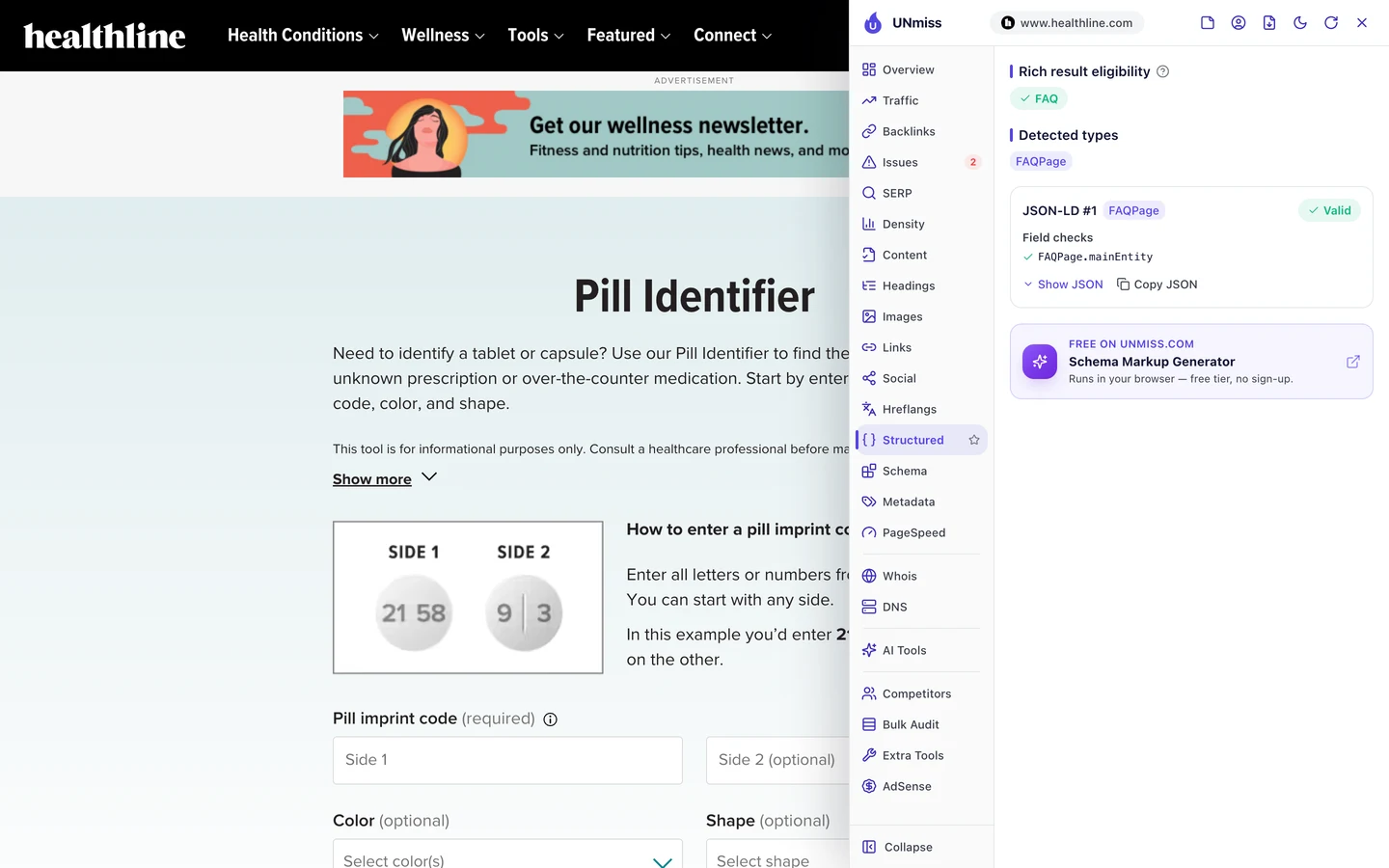
It carries FAQ code, so its questions and answers can show up right in Google's results. Those extras make the result bigger and easier to click.
Calculator.net, the free calculator site we studied on its own, gets 11M visits a month from tools like this. A single tool can do the same job for your site.
Win the big questions too
Small questions add up. But Healthline also ranks for some huge ones.
The Keywords tab of our audit lists every search a site ranks for, where it ranks and how many visits each one sends.
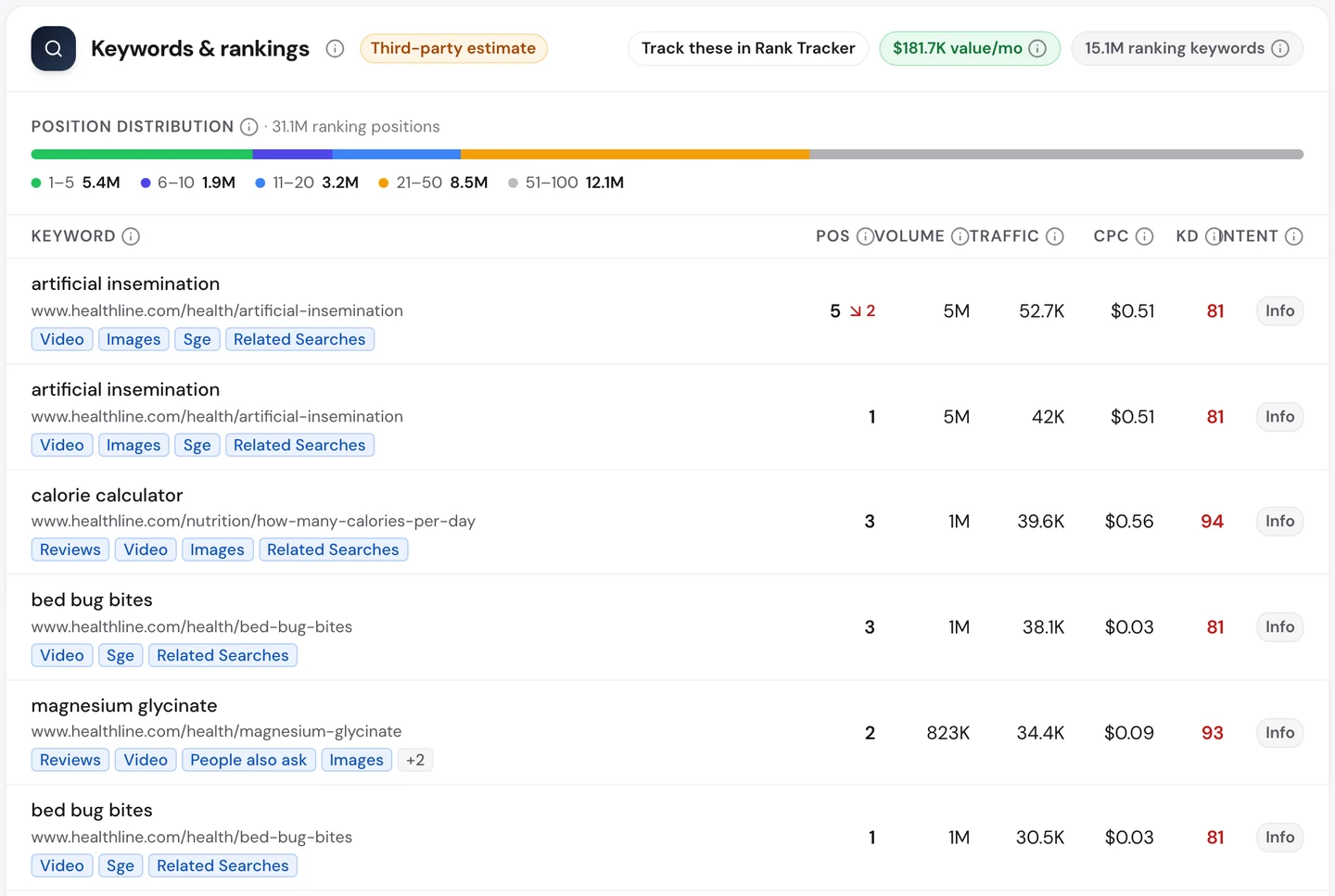
"Artificial insemination" is searched about 5M times a month, and Healthline ranks near the top. Even so, that word brings in only a small part of its traffic.
That's the real point. The big words help, but the site doesn't depend on any of them.
So aim for both. Chase a few big searches, but make sure your small answers carry most of your traffic.
Keep your old winners alive
Now look at the links. A backlink is a link from another website to yours, and Google treats each one a bit like a vote of trust.
The Backlinks tab of our audit shows the same data as our Backlink Analyzer.
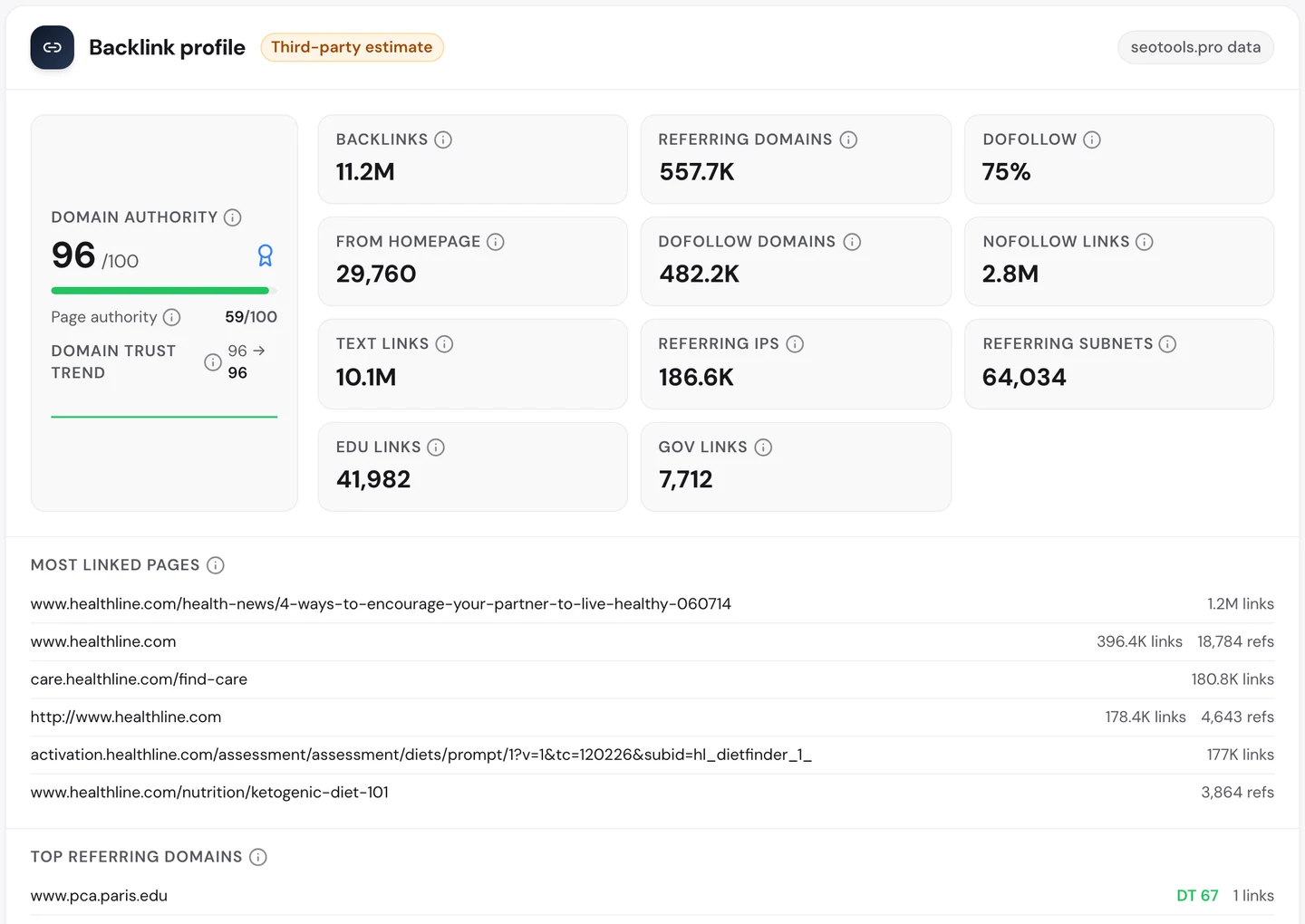
Healthline has about 11M links from more than 500K websites. And the most linked page is a health news article from 2014, with about 1.2M links.
That old article still passes trust to the whole site today. If you deleted a page like that, the trust would be lost.
Our Domain Overview shows the other half of the habit.
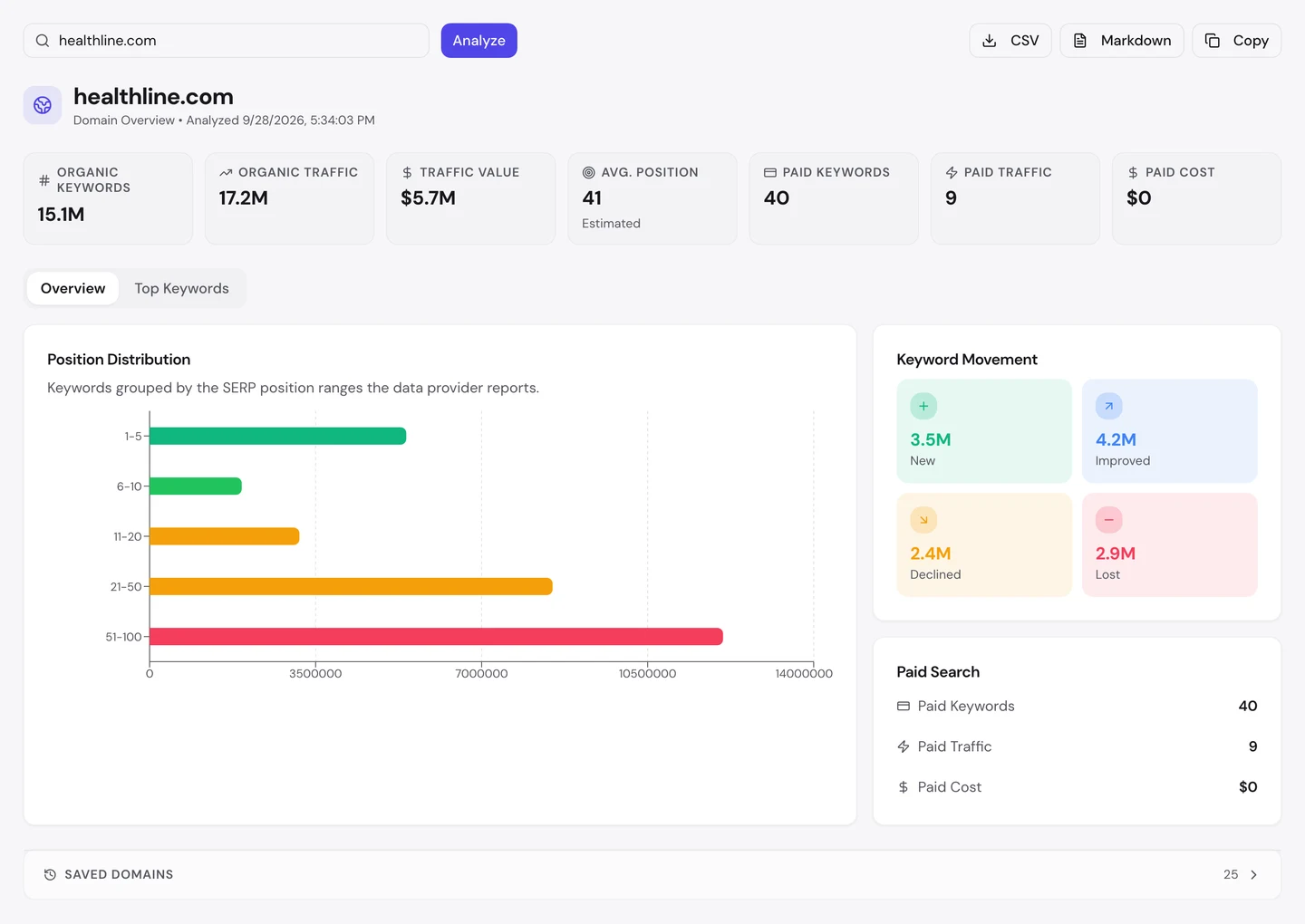
More of Healthline's keywords moved up than dropped. That's what steady updates look like, and the "updated on" date on each article is part of it.
So before you delete an old page, check its links. Update it instead, or point it to a newer page with a redirect, and track your best pages in our Rank Tracker.
Audit the parts every page shares
With millions of pages built from a few templates, one mistake spreads fast. So we checked Healthline with our Website Audit.
It crawls a site the way Google does. It opens each page, follows the links to the next ones, and tests every page against a long list of checks.
We had it crawl 250 pages. The site scored 58 out of 100, which the report rates as fair.
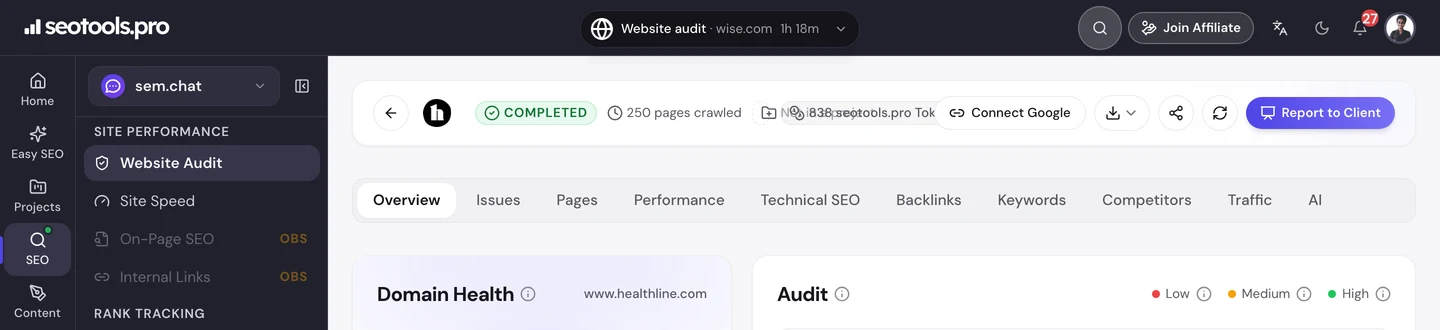
That low score comes mostly from a few problems that repeat. The Issues tab sorts them by how much they matter.
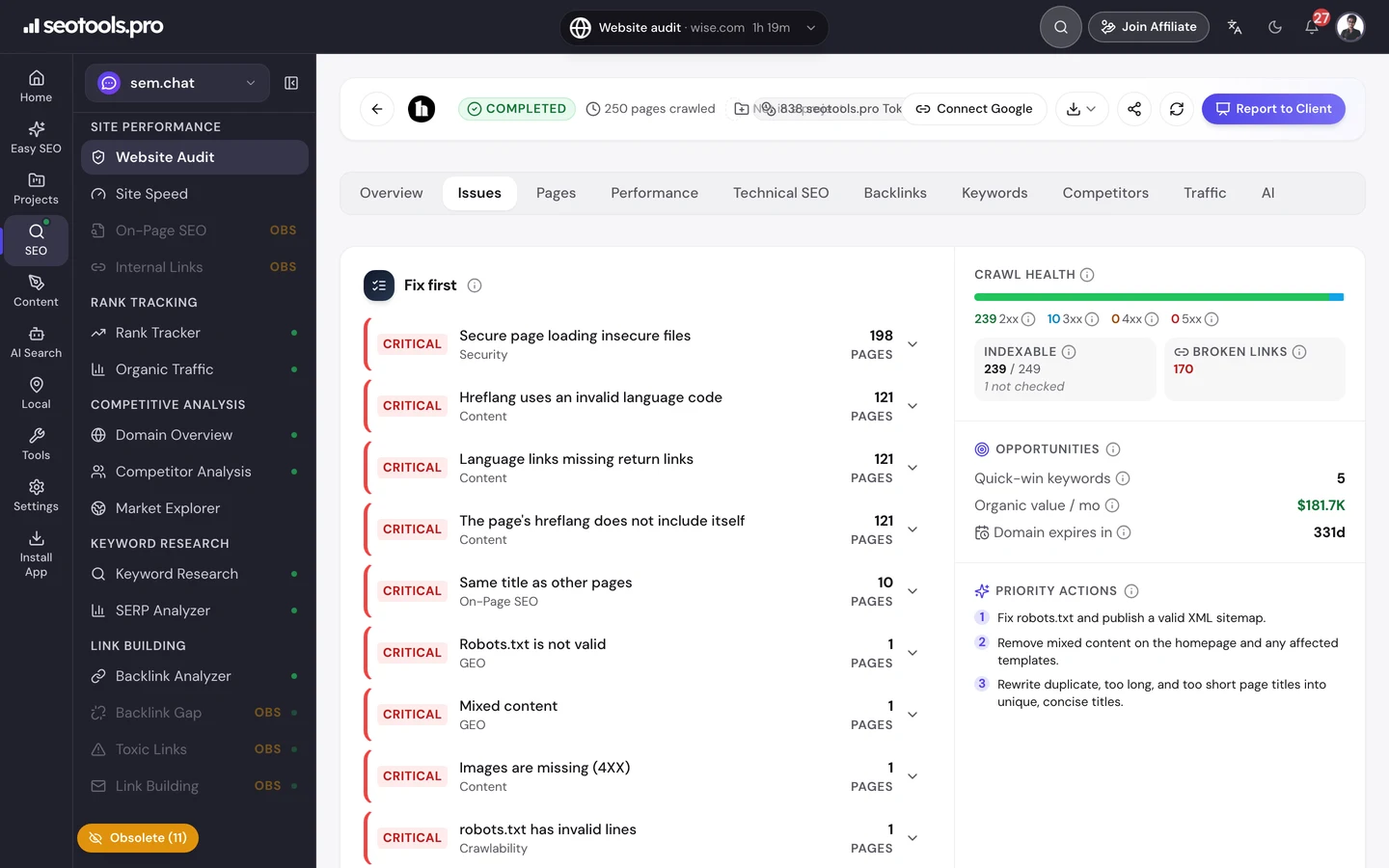
The top one is simple, and your site may have it too. An old tracking pixel loads over plain http, not https, on almost every page we checked.
Browsers warn about this, because a secure page shouldn't load insecure files. It's one line in one template, so it's also one fix.
The audit also shows what a crawler that isn't Google sees. On 40 pages, Healthline's servers sent back a blank error page instead of the article.
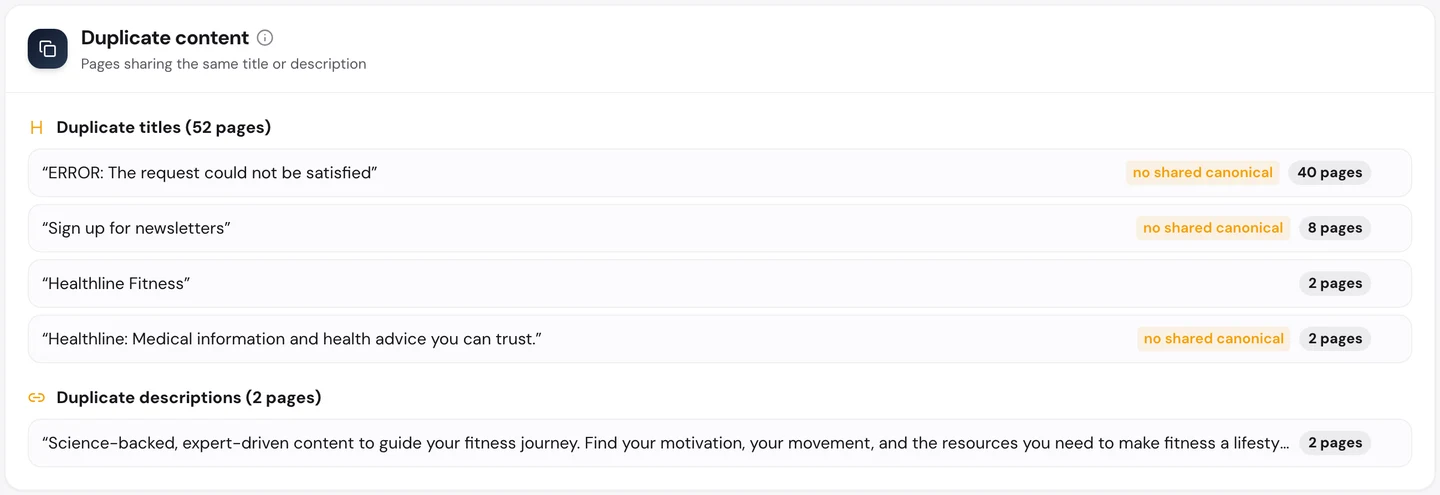
That's the site guarding itself against crawlers it doesn't know. Google still gets the real pages, which is why they rank.
So audit your own templates, not just single pages. One fix in the right place can clear hundreds of errors at once.
Trust real users over lab scores
The Performance tab of the same audit has a surprise. It shows Core Web Vitals, Google's 3 checks of how fast a page loads, how fast it reacts and whether it stays still, measured on real visitors' devices.
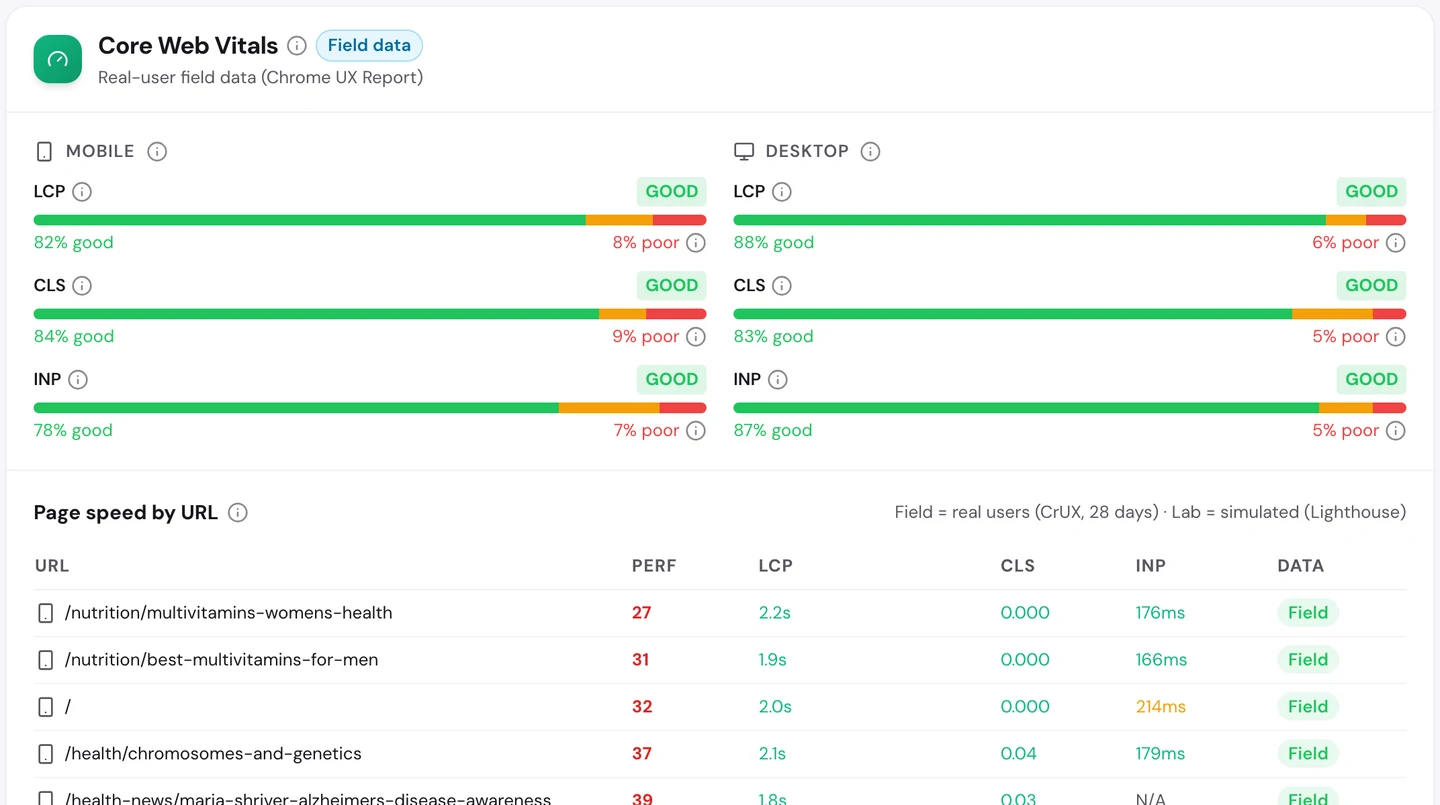
Healthline passes all 3, on phones and on desktops. Yet its lab scores, from simulated tests, sit below 40 for many pages.
Google ranks pages on the real-visitor numbers, not the lab ones. So when the two disagree, trust your real users.
Use lab tests to find what to fix, then check the real numbers to see if it helped. Our Site Speed tool runs both kinds of test on any page.
Know which rivals share your words
The audit's Competitors tab lists the sites that rank for the same searches as you.
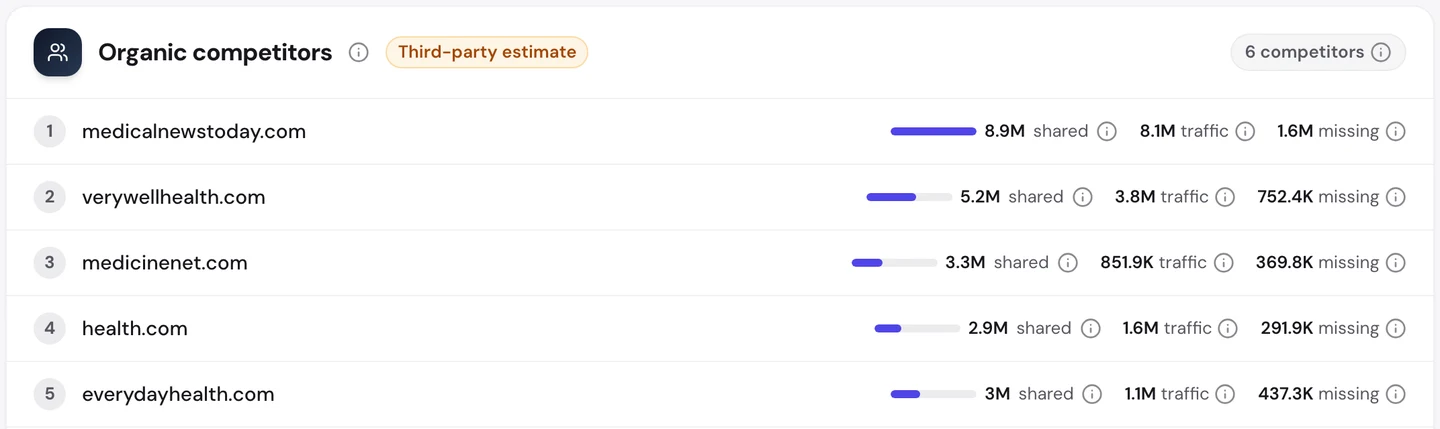
Medical News Today shares about 9M searches with Healthline, and Verywell Health is next. They all answer the same health questions.
Your rivals probably overlap with you just as much.
That's why the trust signals matter so much here. When the answers look alike, the page with the clearer expert review often wins the click.
So check which rivals share your searches, then look at how they show trust. Beat them on the parts you can control.
Decide which AI bots may read you
More and more people now ask ChatGPT or Claude before they ask Google. So we checked which AI tools may read Healthline.
Those tools send crawlers, programs that visit pages and read them. The rules for them live in robots.txt, a file that tells crawlers what they may read, and our extension reads it for you.
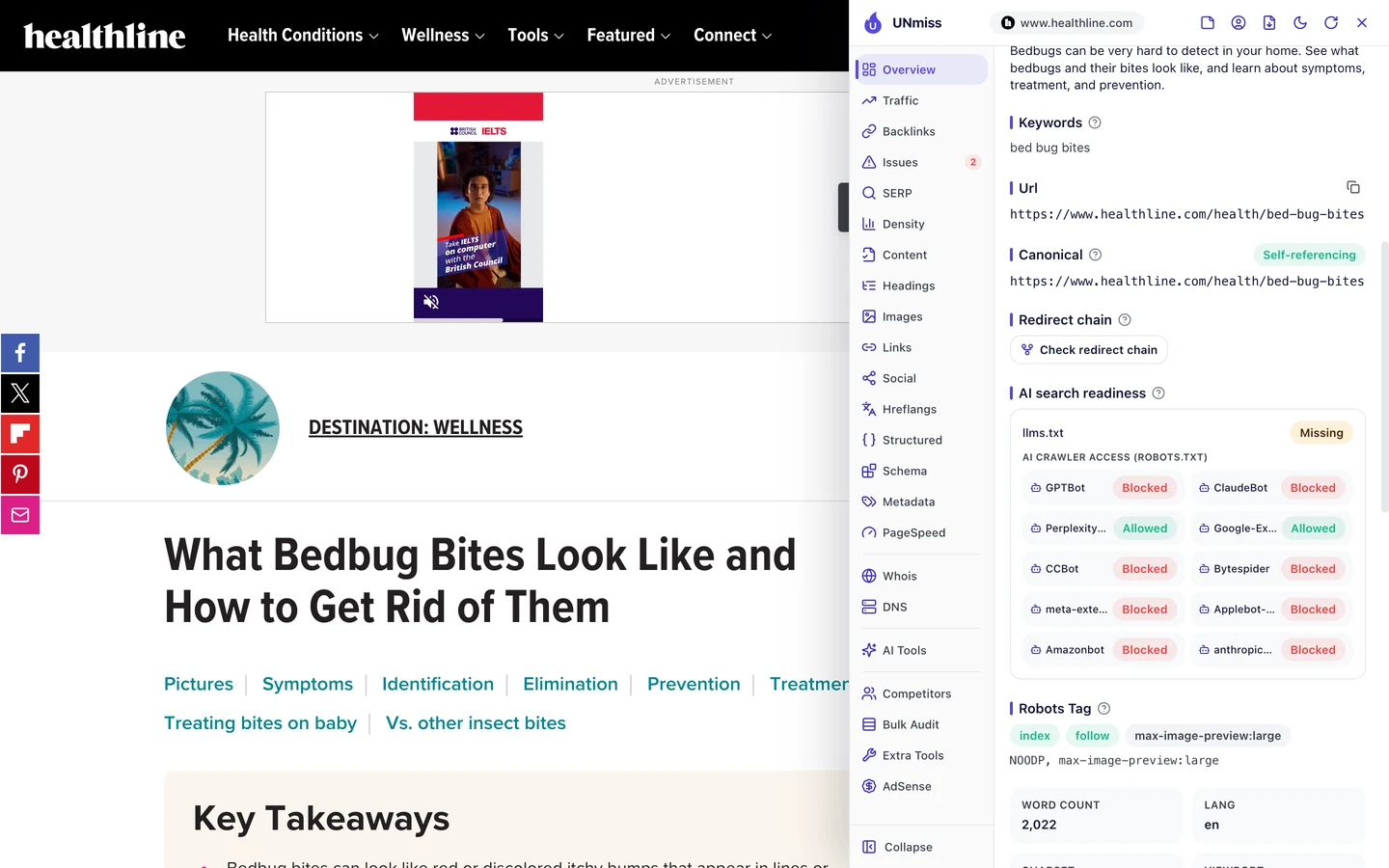
Healthline blocks most AI crawlers, including the ones behind ChatGPT and Claude. It lets in Perplexity and Google's AI crawler.
Canva, the design app we also studied, made a similar choice. But blocked means those AI tools can't quote your pages when people ask about your topic.
So decide on purpose, not by default. Write your rules with our robots.txt generator, then check whether AI tools mention you with our AI Visibility Checker.
Healthline's biggest page brings in less than 1% of its visits. Our Organic Traffic Checker shows your top pages and the share each one brings, so you can see if one page is carrying your site.
- The same report that measured Healthline's spread
- Each top page's traffic, share and top search
- Run it on any rival's domain too
What you cannot copy
First, the part you can't copy: a team of medical experts reviewing millions of pages.
That takes years, money and a lot of trained people. A small site can start with one expert and its most important pages.
Now a few honest notes on the numbers.
We took all our figures on 28 September 2026. The 17M figure counts US searches, and the 38M worldwide figure comes from the audit's Traffic tab.
Both are estimates. Nobody outside Healthline can count its real visits, so tools work them out from rankings and search volume.
The audit's score counts the error pages Healthline served our crawler. So we used the crawl to find shared problems, and we checked the insecure pixel on a live page ourselves.
The one number to take away
0.7%.
That's the share of Healthline's US search visits that come from its single biggest page. The rest is spread across millions of small answers.
That's the goal for any site that wants steady traffic. Answer every question your buyers ask, one clear page at a time.
Found a question your customers ask every week? That could be your next page.
You can run every one of these checks on your own site, and on your rivals', and see the same numbers for yourself.
Frequently asked questions
Do I need a doctor to review health content?
For advice that could affect someone's health, yes. A qualified reviewer catches mistakes and shows readers the page is safe to trust. For light topics, a clear source list may be enough.
How often should I update an older article?
Whenever the facts change, and at least once a year for your most visited pages. Change the date only when you've changed the content, because readers and Google both notice fake updates.
Is it bad to have many short pages?
Not if each one fully answers its own question. Pages become a problem when they repeat each other or say very little. Merge those into one stronger page.
Should I delete old pages that get no traffic?
Check their links first. A page with links can be updated or redirected to a related page. Only remove a page when it has no visits, no links and nothing worth saving.
Can a small health site compete with Healthline?
On narrow topics, yes. Pick a subject you know deeply, answer its questions better than anyone, and show real expertise. Big sites often cover niche questions only briefly.
Does an insecure file really hurt rankings?
Not directly, but browsers may warn visitors or block the file. That can break a page or scare people off. It's usually a quick fix, so it's worth doing.
What is crawl-delay, and does Google use it?
It's a robots.txt line that asks crawlers to wait between requests. Google ignores it, so it won't slow Google down. Some other search engines do follow it.
Why would a site block AI crawlers?
To stop AI companies from using its content for free. The trade-off is that blocked AI tools can't quote or link to the site, so it may miss visitors who ask AI first.